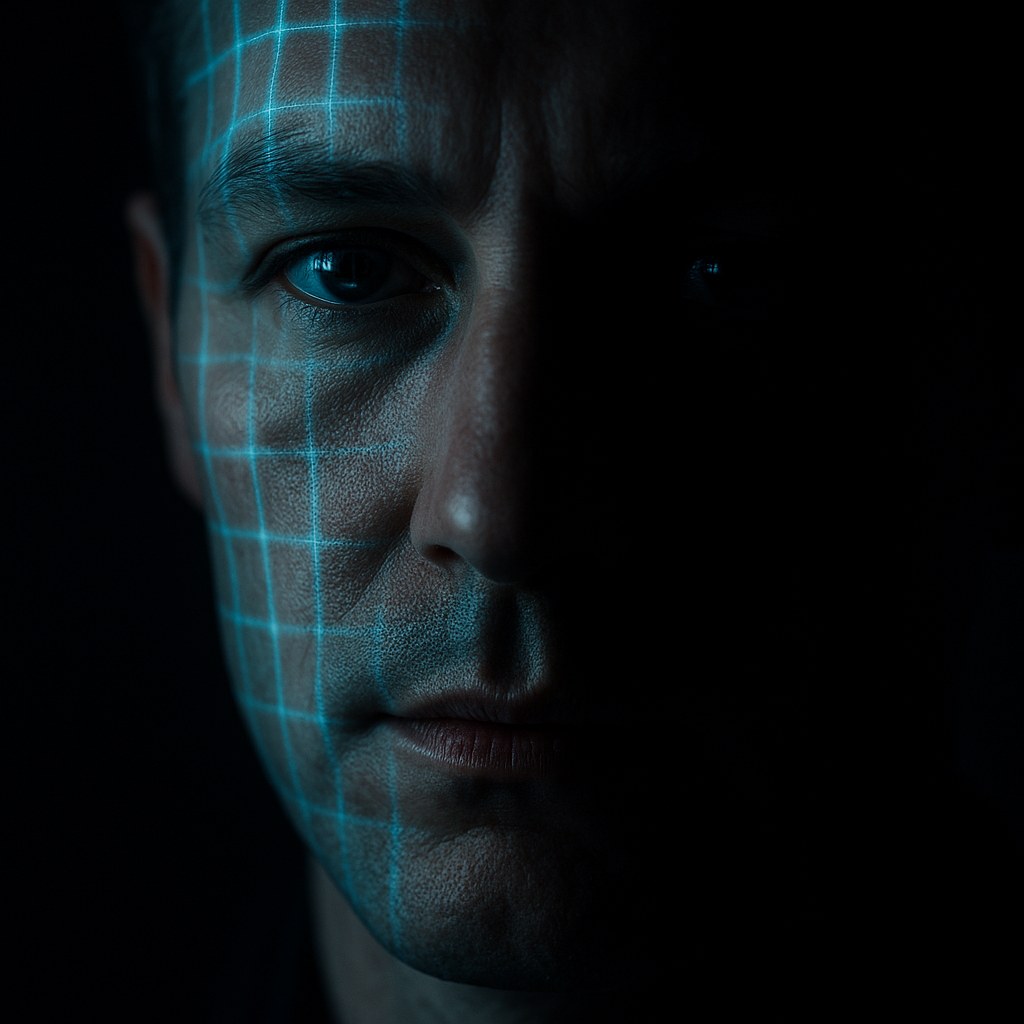
Facial recognition technology has slipped into our lives with remarkable speed and startlingly little public debate. It unlocks our phones, speeds us through airport security, helps police identify suspects, and even tracks attendance in schools. By 2024, the global facial recognition market had surpassed $6 billion, and analysts project it will exceed $13 billion by 2029. But behind the convenience lies a tangle of ethical problems — bias, mass surveillance, consent erosion, and accountability gaps — that we can no longer afford to treat as afterthoughts.
This isn’t an argument against the technology itself. Facial recognition can genuinely help find missing children, catch violent criminals, and streamline frustrating processes. The problem is that we’ve deployed it faster than we’ve thought about it. And the hidden costs — measured in wrongful arrests, privacy loss, and chilling effects on civil liberties — are already coming due.
How Facial Recognition Actually Works (And Why It’s Flawed)
At its core, facial recognition software maps the geometry of a face — the distance between your eyes, the shape of your jawline, the contour of your cheekbones — and converts that map into a mathematical representation called a faceprint. It then compares that faceprint against a database to find a match.
Sounds straightforward. But the accuracy of that comparison depends heavily on the quality of the training data, the algorithm’s design, lighting conditions, camera angles, and even the age of the reference photo. The technology doesn’t “see” faces the way humans do. It calculates probabilities. And those probabilities are far from equal across demographics.
The Accuracy Gap Nobody Wants to Talk About
In 2018, MIT researcher Joy Buolamwini and Timnit Gebru published a landmark study called “Gender Shades” that exposed what many suspected but few had quantified: commercial facial recognition systems from major tech companies performed dramatically worse on darker-skinned faces, particularly darker-skinned women. Error rates for light-skinned men hovered around 0.8%. For dark-skinned women, they soared to nearly 35%.
The National Institute of Standards and Technology (NIST) confirmed these findings in its own 2019 evaluation, testing 189 algorithms from 99 developers. The results showed that African American and Asian faces were 10 to 100 times more likely to be misidentified than white faces, depending on the algorithm. Native American faces had the highest false positive rates of all.
These aren’t just numbers on a spreadsheet. They translate directly into real-world harm.
Wrongful Arrests: When the Algorithm Gets It Wrong
At least seven people in the United States — all Black — have been wrongfully arrested based on faulty facial recognition matches, according to reporting by the Washington Post and the Innocence Project. The actual number is almost certainly higher, because police departments often don’t disclose when facial recognition played a role in an arrest.
Consider Robert Williams, a Black man from Detroit who was arrested in January 2020 for a theft based on a blurry surveillance image matched to his old driver’s license photo. He spent 30 hours in custody. The evidence? A facial recognition hit that detectives treated as definitive. No physical evidence linked him to the crime. His case became the first publicly documented wrongful arrest due to facial recognition in the US, but it wasn’t the last.
Porcha Woodruff, a Black woman who was eight months pregnant, was arrested in Detroit in 2023 for a carjacking she didn’t commit — again, based on a facial recognition match. She was held for hours and later went into labor prematurely. The charges were eventually dropped.
These cases reveal a critical ethical failure: law enforcement agencies are using a probabilistic tool as if it were conclusive evidence. A facial recognition match should be a lead, nothing more. But in practice, it often becomes the foundation of an arrest.
The Surveillance Problem: Privacy in Public Spaces
Accuracy isn’t the only concern. Even a perfectly accurate system raises profound questions about privacy and civil liberties.
You’re Being Scanned Without Knowing It
In many cities, facial recognition cameras operate in public spaces — shopping districts, transportation hubs, stadiums — without any meaningful notice to the people being scanned. You haven’t opted in. You haven’t consented. Your face is simply captured, analyzed, and often stored.
Clearview AI built a database of over 30 billion facial images scraped from social media platforms and other websites without users’ permission. Law enforcement agencies across the US have used this database to identify suspects, witnesses, and even bystanders. Several countries have fined Clearview AI for privacy violations, but the damage — a massive, unconsented biometric database — is already done.
What’s the ethical implication of facial recognition in public spaces? At its core, it eliminates practical anonymity. In a free society, you should be able to walk down the street, attend a protest, visit a doctor, or go to a place of worship without the government or a corporation logging your movements. Facial recognition makes that impossible at scale.
The Chilling Effect on Free Expression
This matters more than most people realize. Research in political science has consistently shown that people behave differently when they know they’re being watched. They self-censor. They avoid controversial gatherings. They suppress dissent.

When protesters in Hong Kong tore down surveillance cameras and wore masks to defeat facial recognition, they weren’t being paranoid. They understood that ubiquitous facial recognition gives governments an unprecedented tool for identifying and suppressing political opposition. China’s use of the technology to surveil Uyghur Muslims in Xinjiang — including automated ethnic classification — stands as one of the most chilling examples of what happens when facial recognition is deployed without ethical guardrails.
The US isn’t China. But the infrastructure being built today could be repurposed tomorrow. Databases don’t get deleted when administrations change.
Bias Isn’t a Bug. It’s a Feature of How These Systems Are Built.
One of the most common misconceptions about facial recognition bias is that it’s a technical glitch that better engineering will eventually fix. The reality is more complicated.
Facial recognition systems learn from training data — massive datasets of labeled facial images. If those datasets overrepresent light-skinned faces (and most historically have), the resulting algorithm will perform worse on underrepresented groups. That’s not malice. It’s statistics.
But here’s the deeper problem: even if you fix the training data, the technology is often deployed in ways that amplify existing inequalities. Police departments use facial recognition disproportionately in minority neighborhoods — not because the technology is racist, but because policing patterns are. More cameras in over-policed communities mean more facial recognition scans of people of color, which means more opportunities for false matches among the very groups the technology already struggles to identify accurately.
Buolamwini, who founded the Algorithmic Justice League, has argued that the question isn’t just whether we can make facial recognition less biased — it’s whether we should be using it at all in contexts where bias causes irreversible harm, like criminal justice.
The Legal Vacuum: Why Regulation Has Lagged Behind
If you’re wondering what laws govern facial recognition in the United States, the honest answer is: not many.
There is no comprehensive federal law regulating facial recognition. What exists instead is a patchwork of state and local rules that vary wildly:
- Illinois has the Biometric Information Privacy Act (BIPA), the strongest biometric privacy law in the country. It requires informed consent before collecting biometric data and allows individuals to sue for violations. Meta paid $650 million to settle a BIPA lawsuit over its photo-tagging feature.
- San Francisco, Boston, Portland, and several other cities have banned government use of facial recognition outright.
- Texas and Washington have biometric privacy laws, but they’re narrower than Illinois’s and don’t allow private lawsuits.
- Most states have no specific facial recognition laws at all.
The European Union has taken a more aggressive approach. The EU AI Act, which entered into force in 2024, classifies most real-time remote biometric identification in public spaces by law enforcement as an “unacceptable risk” and bans it outright, with narrow exceptions. It also prohibits biometric categorization systems that infer sensitive attributes like race or political opinions.
The contrast is stark. Europe is building guardrails. The US is still debating whether guardrails are necessary.
What Should Regulation Look Like?
Most ethics researchers and civil liberties advocates converge on a few key principles for responsible facial recognition use:
- Warrant requirements for law enforcement use, with facial recognition treated as a search under the Fourth Amendment
- Accuracy standards with mandatory, independent testing across demographic groups before deployment
- Transparency requirements so the public knows when and how the technology is being used
- Prohibition on real-time mass surveillance in public spaces
- Meaningful human review before any facial recognition match leads to an arrest or other significant action
- Right to notice so individuals know when they’ve been identified by facial recognition
These aren’t radical proposals. They reflect the same standards we apply to other powerful investigative tools. A wiretap requires a warrant. A facial recognition search arguably deserves at least the same scrutiny.
Corporate Use: The Quiet Expansion
Law enforcement gets most of the attention, but private companies are deploying facial recognition in ways that deserve equal scrutiny.
Retailers use it to identify shoplifters — and sometimes to flag “suspicious” shoppers based on opaque criteria. In 2022, the FTC took action against Rite Aid for deploying facial recognition in hundreds of stores that generated thousands of false-positive matches, leading to customers being wrongly accused of theft, followed by employees, and publicly humiliated. The system disproportionately misidentified people of color.
Employers have begun using facial analysis tools in hiring — sometimes called “emotion AI” — claiming to assess candidates’ personality traits or trustworthiness from their facial expressions during video interviews. There is no credible scientific evidence that facial expressions reliably indicate personality, honesty, or job performance. The American Psychological Association has stated that such inferences are not supported by research.
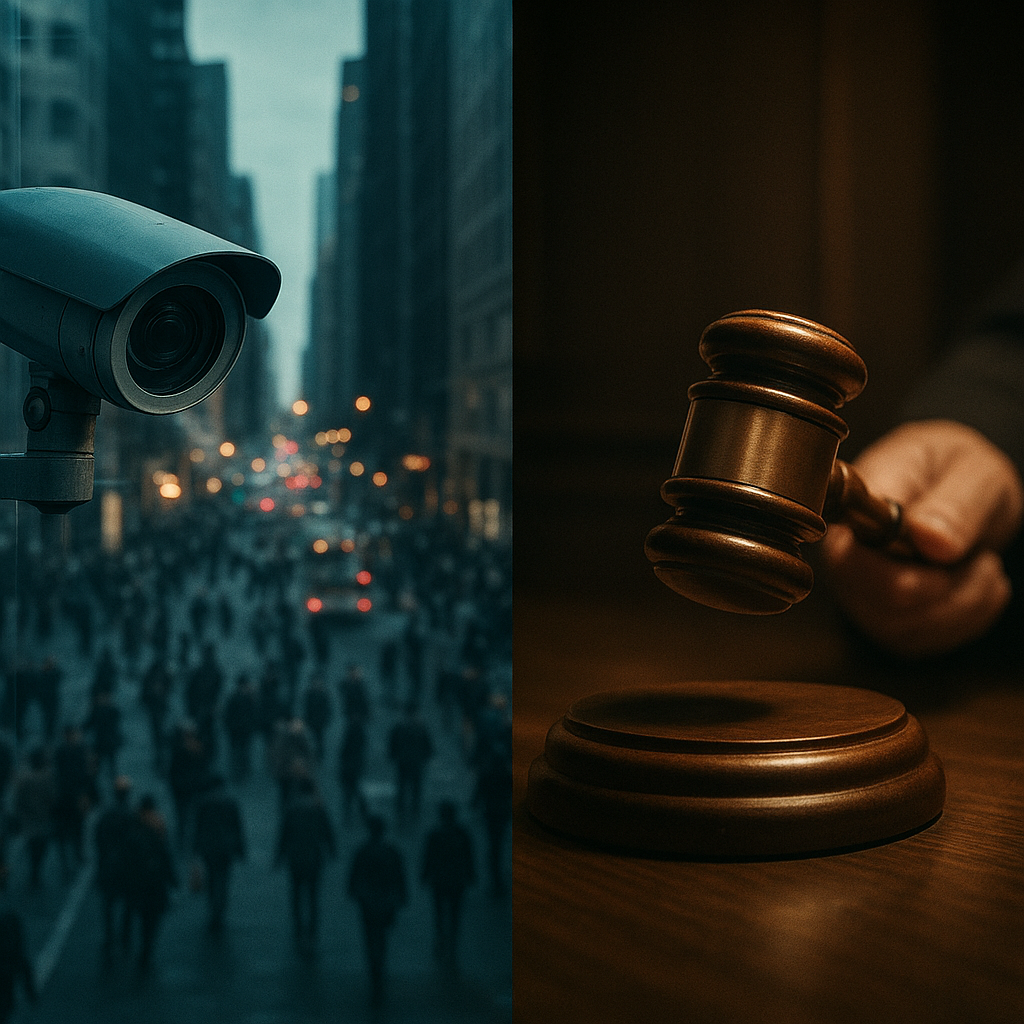
Stadiums and concert venues scan attendees’ faces for “security,” but the same infrastructure can be repurposed for marketing, tracking VIP behavior, or building consumer profiles.
The ethical question isn’t just “does it work?” It’s “should we be doing this at all, and who decided?”
What Responsible Use Actually Looks Like
Not every application of facial recognition is harmful. The technology exists on a spectrum, and the ethical calculus depends heavily on context.
Unlocking your phone with your face? The data stays on your device, you consented, and the risk of harm to others is minimal. Most privacy advocates consider this a low-stakes use.
Using facial recognition to identify an unknown suspect in a violent crime, with a warrant, human verification, and corroborating evidence? That’s a more defensible application, assuming the system meets accuracy standards.
Deploying real-time facial recognition across an entire city’s camera network to track everyone’s movements continuously? That crosses a line. The surveillance capacity it creates far outweighs any public safety benefit, and the potential for abuse is enormous.
Georgetown Law’s Center on Privacy and Technology has proposed a useful framework: facial recognition use should be evaluated based on proportionality (does the benefit outweigh the privacy cost?), accuracy (does it work equally well for everyone?), accountability (can decisions be challenged?), and consent (do people know and agree?).
Most current deployments fail at least two of these tests.
The Road Ahead: Ethics Can’t Be an Afterthought
The history of technology teaches a consistent lesson: it’s far easier to build ethical safeguards into a system before it’s widely deployed than to retrofit them afterward. We’re already late with facial recognition. The infrastructure is built. The databases exist. The habits are formed.
But “late” isn’t “too late.” Several positive developments suggest the conversation is shifting:
- IBM, Amazon, and Microsoft all paused or restricted their facial recognition sales to law enforcement in 2020, acknowledging the technology wasn’t ready for unregulated deployment.
- Multiple US cities have enacted bans or moratoria, creating political momentum for broader regulation.
- The EU AI Act establishes a global regulatory template that other jurisdictions will likely follow.
- Public awareness is growing. A 2021 Pew Research survey found that 46% of Americans don’t trust law enforcement to use facial recognition responsibly.
The most important shift may be conceptual. For too long, the debate has been framed as “technology versus privacy,” as if these are inherently opposing values. They’re not. The real question is: what kind of society do we want to live in, and does ubiquitous facial recognition move us closer to or further from that vision?
Conclusion
Facial recognition is not inherently good or evil. It’s a tool — a remarkably powerful one — and like all powerful tools, its impact depends entirely on how we build, deploy, and govern it. Right now, we’re failing on all three counts. The technology exhibits documented racial and gender bias. It’s used without meaningful consent or transparency. And the legal framework governing it is inadequate or nonexistent in most jurisdictions.
The hidden costs are real: innocent people arrested, privacy quietly eroded, dissent chilled, and inequality amplified by systems that claim to be objective. These aren’t hypothetical risks. They’re documented outcomes.
Ethics in facial recognition isn’t a luxury or an academic exercise. It’s the difference between a technology that serves the public and one that surveils it. The choices we make in the next few years — about regulation, deployment standards, and democratic oversight — will determine which version we get. The technology won’t wait for us to catch up. Neither should we.